


Sanying Fluid Equipment Co., Ltd. : Your Professional Sanitary Diaphragm Valve Manufacturer!
Sanying Fluid Equipment Co., Ltd. was established in 2010, strategically situated in Wenzhou, China. Our factory dedicated to delivering exceptional valve and pipe solutions with precision and excellence. We are a leading manufacturing and trading combo for sanitary valves, pipe and tank fittings more than 10 years.
-
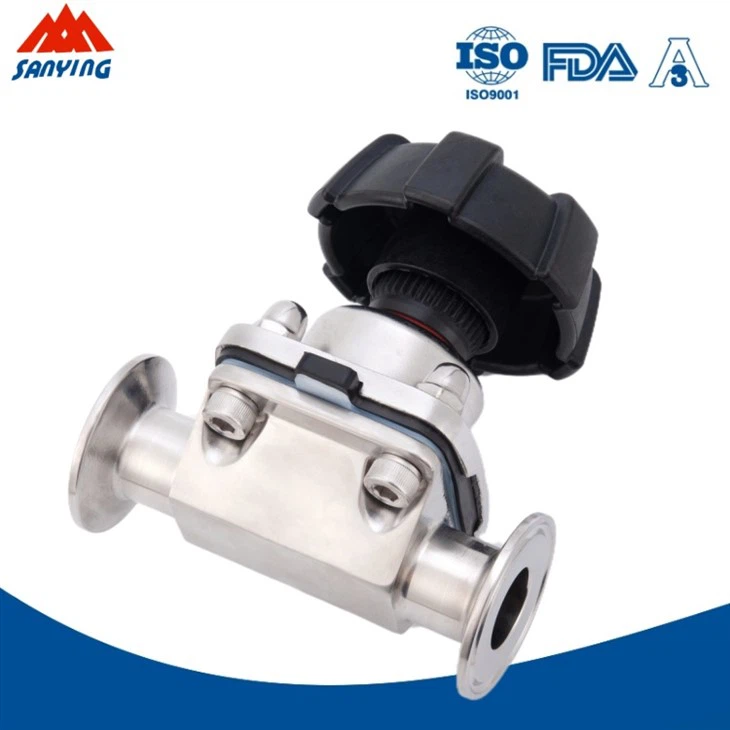
![3A Manual SS304/316 Sanitary Diaphragm Valve]() 3A Manual SS304/316 Sanitary Diaphragm Valve3A Sanitary Diaphragm Valve (SS304/316) - Manual/Pneumatic Suitable for biopharmaceutical, food, dairy, yogurt, beverage & vaccine production lines, as well as large/small volume injection...view more
3A Manual SS304/316 Sanitary Diaphragm Valve3A Sanitary Diaphragm Valve (SS304/316) - Manual/Pneumatic Suitable for biopharmaceutical, food, dairy, yogurt, beverage & vaccine production lines, as well as large/small volume injection...view more -
![3A Weld Manual Sanitary Hygienic Diaphragm valve]() 3A Weld Manual Sanitary Hygienic Diaphragm valve3A Weld Manual Sanitary Hygienic Diaphragm valve (SS316) Engineered for biopharmaceutical, food, dairy, yogurt, beverage, vaccine production and large/small volume injection systems, ideal for...view more
3A Weld Manual Sanitary Hygienic Diaphragm valve3A Weld Manual Sanitary Hygienic Diaphragm valve (SS316) Engineered for biopharmaceutical, food, dairy, yogurt, beverage, vaccine production and large/small volume injection systems, ideal for...view more -
![3A Thread Manual Sanitary Hygienic Diaphragm Valve]() 3A Thread Manual Sanitary Hygienic Diaphragm Valve3A Thread Manual Sanitary Hygienic Diaphragm Valve for Biopharmaceutical & Hygienic Systems Ideal for hygienic and aseptic processes in pharmaceutical, biological, food, dairy, yogurt, beverage...view more
3A Thread Manual Sanitary Hygienic Diaphragm Valve3A Thread Manual Sanitary Hygienic Diaphragm Valve for Biopharmaceutical & Hygienic Systems Ideal for hygienic and aseptic processes in pharmaceutical, biological, food, dairy, yogurt, beverage...view more -
![3A Flange Manual Hygienic Sanitary Diaphragm Valve]() 3A Flange Manual Hygienic Sanitary Diaphragm Valve3A Flange Manual Hygienic Sanitary Diaphragm Valve is meticulously designed to meet the stringent requirements of biological, pharmaceutical, and hygienic processing systems. Crafted for...view more
3A Flange Manual Hygienic Sanitary Diaphragm Valve3A Flange Manual Hygienic Sanitary Diaphragm Valve is meticulously designed to meet the stringent requirements of biological, pharmaceutical, and hygienic processing systems. Crafted for...view more -
![3A Manual Stainless Steel Hygienic Diaphragm Valve]() 3A Manual Stainless Steel Hygienic Diaphragm Valve3A Manual Stainless Steel Hygienic Diaphragm Valve is designed specifically for pure water (PW) and pharmaceutical injectable water (WFI) systems, our Sanitary U-Type Diaphragm Valve meets the...view more
3A Manual Stainless Steel Hygienic Diaphragm Valve3A Manual Stainless Steel Hygienic Diaphragm Valve is designed specifically for pure water (PW) and pharmaceutical injectable water (WFI) systems, our Sanitary U-Type Diaphragm Valve meets the...view more -
![3A Forged GEMU Replaced Sanitary Diaphragm Valve]() 3A Forged GEMU Replaced Sanitary Diaphragm Valve3A Forged GEMU Replaced Sanitary Diaphragm Valve are engineered exclusively for biological and pharmaceutical pipeline systems, where sterility, precision, and reliability are non-negotiable....view more
3A Forged GEMU Replaced Sanitary Diaphragm Valve3A Forged GEMU Replaced Sanitary Diaphragm Valve are engineered exclusively for biological and pharmaceutical pipeline systems, where sterility, precision, and reliability are non-negotiable....view more -
![3A Manual Stainless Steel Sanitary Diaphragm Valve]() 3A Manual Stainless Steel Sanitary Diaphragm ValveSanitary 3 way T type Diaphragm valves which is used for biological/pharmaceutical system. With good anti-creep and pressure-resistant property. Can be made that with sterilizing/sample valve....view more
3A Manual Stainless Steel Sanitary Diaphragm ValveSanitary 3 way T type Diaphragm valves which is used for biological/pharmaceutical system. With good anti-creep and pressure-resistant property. Can be made that with sterilizing/sample valve....view more -
![3A Tri Clamp Pneumatic Sanitary Diaphragm Valve]() 3A Tri Clamp Pneumatic Sanitary Diaphragm ValveSanitary Pneumatic Diaphragm valves which is used for biological/pharmaceutical system which usually connect with the PLC system.With good anti-creep and pressure-resistant property Specifically...view more
3A Tri Clamp Pneumatic Sanitary Diaphragm ValveSanitary Pneumatic Diaphragm valves which is used for biological/pharmaceutical system which usually connect with the PLC system.With good anti-creep and pressure-resistant property Specifically...view more -
![Pneumatic Stainless Steel Sanitary Diaphragm Valve]() Pneumatic Stainless Steel Sanitary Diaphragm ValveSanitary Pneumatic Diaphragm valves which is used for biological/pharmaceutical system which usually connect with PLC system for easy control by the gas source. Inner Ra≤0.4μm to meet food...view more
Pneumatic Stainless Steel Sanitary Diaphragm ValveSanitary Pneumatic Diaphragm valves which is used for biological/pharmaceutical system which usually connect with PLC system for easy control by the gas source. Inner Ra≤0.4μm to meet food...view more -
![3A Pneumatic Water System Hygienic Diaphragm Valve]() 3A Pneumatic Water System Hygienic Diaphragm ValveSanitary U type Pneumatic Diaphragm valves which is used for Pure water treatment system. Zero dead corner design to ensure without bacterial growth.Control can be manual or pneumatic operation....view more
3A Pneumatic Water System Hygienic Diaphragm ValveSanitary U type Pneumatic Diaphragm valves which is used for Pure water treatment system. Zero dead corner design to ensure without bacterial growth.Control can be manual or pneumatic operation....view more -
![3A Pneumatic Actuator Sanitary Diaphragm Valve]() 3A Pneumatic Actuator Sanitary Diaphragm ValveSanitary Pneumatic 3 way Diaphragm valves which is used for biological/pharmaceutical pipeline system and connect with the PLC system. Pneumatic valves are easy to control by gas source and...view more
3A Pneumatic Actuator Sanitary Diaphragm ValveSanitary Pneumatic 3 way Diaphragm valves which is used for biological/pharmaceutical pipeline system and connect with the PLC system. Pneumatic valves are easy to control by gas source and...view more


Why choose us?
Advanced equipment
Our company specializes in manufacturing high-precision valves and pipeline components for pharmaceutical machinery equipment. The facility features a well-organized layout with dedicated sections for raw material storage, coil processing, CNC machining, precision polishing, professional assembly, and standardized shipping.
Quality control
Each workshop maintains a clean and orderly environment, supported by streamlined processes and close teamwork to ensure strict quality control from raw materials to finished products. We are committed to delivering reliable and efficient solutions that meet industry standards.
Sales market
Our high-standard valves and fittings have been widely adopted across global markets, including Russia, India, Indonesia, Europe, Thailand, South Korea, and Singapore, earning consistent positive feedback for product quality, reliability, and service.
Benefits of Sanitary Diaphragm Valve
Hygienic design
The most significant advantage is their compliance with sanitary & BPE standards. The diaphragm completely isolates the process fluid from the valve body and actuator, reducing contamination risk and block body designs minimize dead legs.
Ease of cleaning
These valves are designed for easy cleaning & full drainability, a critical feature in pharmaceutical applications where sterility is non-negotiable. Their smooth surfaces and minimal dead legs make CIP/SIP processes highly effective.
Precise flow control
When sized and applied properly, sanitary diaphragm valves are excellent for throttling applications, offering smooth and precise control over fluid flow.
Corrosion resistance
Materials like stainless steel and USP Class VI PTFE & EPDM diaphragms ensure resistance to aggressive cleaning agents and corrosive process fluids.
Product Parameters
|
Product name |
Sanitary Pneumatic 3 way Pharmaceutical Diaphragm Valve |
|
Material quality |
AISI/Stainless Steel 316L |
|
Standard |
DIN/ISO/3A |
|
Size available |
1/2" - 4" |
|
Seal Ring |
PTFE+EPDM Double Layer Membrane with FDA 177.2600 |
|
Application |
Pharmacy, Biological, beer, food, dairy, beverage, cosmetic, chemical industry |
Food manufacturing industry
Sanitary diaphragm valves are widely used in food, wine, beverage, dairy products and other production processes due to their simple structure, convenient loading and unloading, flexible operation, and low fluid resistance. They are used to control the flow of water, gas, finished oil and corrosive media.
Biochemical pharmaceutical industry and biotechnology
In these industries, the anti-pollution performance of sanitary diaphragm valves is particularly important. A closed space is formed inside the valve to prevent the fluid in the pipeline from mixing with air, dust and impurities in the environment, thereby preventing contamination and cross infection.
Fine chemicals and bioengineering
Sanitary diaphragm valves can adapt to a variety of media, including gas, liquid, high-viscosity fluid, etc., so they are also widely used in these industries.
Our Certificate

Packaging and shipping

We're well-known as one of the most professional sanitary diaphragm valve manufacturers and suppliers in China for over 15 years. If you're going to buy high quality sanitary diaphragm valve made in China, welcome to get pricelist and quotation from our factory. We also accept customized orders.
