Can a manual ball valve be used in an oil and gas pipeline?
In the complex and demanding world of oil and gas pipelines, the selection of appropriate valves is crucial for ensuring the safe, efficient, and reliable operation of the entire system. Manual ball valves are a type of valve that has been widely used in various industries for a long time. As a manual ball valve supplier, I often receive inquiries about whether manual ball valves can be used in oil and gas pipelines. In this blog post, I will explore this question in detail, analyzing the advantages, limitations, and application scenarios of manual ball valves in oil and gas pipelines.
Advantages of Manual Ball Valves in Oil and Gas Pipelines
1. Simple Structure and Easy Operation
Manual ball valves have a relatively simple structure, consisting mainly of a ball with a hole in the center, a valve body, and a stem for manual operation. This simple design makes them easy to install, maintain, and operate. In an oil and gas pipeline, operators can quickly open or close the valve by simply turning the handle, which is very convenient for on - site operation and emergency response.
2. Good Sealing Performance
The ball in a manual ball valve provides excellent sealing performance. When the valve is closed, the ball is pressed against the valve seat, creating a tight seal that can effectively prevent the leakage of oil or gas. This is of utmost importance in oil and gas pipelines, as even a small amount of leakage can lead to significant safety hazards and economic losses.


3. Low Flow Resistance
The full - bore design of many manual ball valves allows for a smooth and unobstructed flow of oil and gas. The internal passage of the valve is the same size as the pipeline, resulting in low flow resistance. This not only reduces energy consumption during the transportation of oil and gas but also minimizes the pressure drop along the pipeline, ensuring the efficient operation of the system.
4. High Durability
Manual ball valves are typically made of high - quality materials such as stainless steel, carbon steel, or alloy steel, which can withstand high pressures, high temperatures, and corrosive environments commonly found in oil and gas pipelines. These materials have excellent mechanical properties and corrosion resistance, ensuring a long service life for the valves.
Limitations of Manual Ball Valves in Oil and Gas Pipelines
1. Limited Automation
As the name suggests, manual ball valves require manual operation. In large - scale oil and gas pipeline systems, where remote control and automated operation are often required, manual ball valves may not be the best choice. For example, in a pipeline network that spans a large area, it is impractical to rely on manual operation to control the flow of oil and gas at multiple locations.
2. High Torque Requirement for Large - Size Valves
In oil and gas pipelines, large - size valves are often needed to handle high - volume flows. Manual ball valves of large sizes may require a significant amount of torque to operate, which can be difficult for operators to achieve, especially in emergency situations. This may limit their application in some high - flow and high - pressure scenarios.
3. Potential for Cavitation
In certain operating conditions, such as when there is a large pressure difference across the valve, cavitation may occur in manual ball valves. Cavitation is the formation and collapse of vapor bubbles in the fluid, which can cause damage to the valve components and reduce the service life of the valve.
Application Scenarios of Manual Ball Valves in Oil and Gas Pipelines
1. Small - Scale and Low - Pressure Pipelines
Manual ball valves are well - suited for small - scale oil and gas pipelines with relatively low pressures. For example, in some on - site storage facilities or small - scale distribution systems, manual ball valves can be used to control the flow of oil and gas easily and cost - effectively.
2. Isolation Valves
In oil and gas pipelines, isolation valves are used to isolate different sections of the pipeline for maintenance, repair, or emergency shutdown. Manual ball valves can be used as isolation valves due to their good sealing performance and simple operation. They can be installed at strategic locations along the pipeline to cut off the flow of oil and gas when necessary.
3. Backup Valves
In some cases, manual ball valves can be used as backup valves in automated pipeline systems. In the event of a failure of the automated control system, operators can manually operate the backup ball valves to ensure the safety and stability of the pipeline.
Our Manual Ball Valve Products
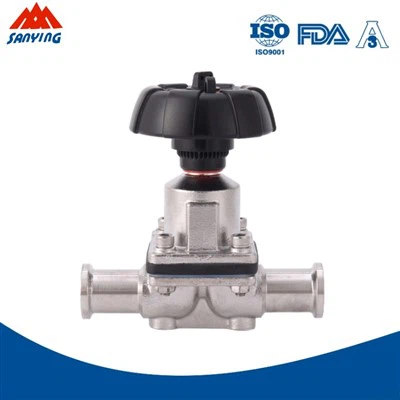
As a manual ball valve supplier, we offer a wide range of manual ball valves suitable for various applications in oil and gas pipelines. One of our popular products is the Clamped Manual Sanitary Ball Valve. This valve is designed with high - quality materials and advanced manufacturing processes, ensuring excellent sealing performance, low flow resistance, and long service life. It is suitable for use in oil and gas pipelines where sanitary and reliable operation is required.
Conclusion
In conclusion, manual ball valves can be used in oil and gas pipelines, especially in small - scale, low - pressure, and isolation applications. They offer several advantages such as simple structure, good sealing performance, low flow resistance, and high durability. However, they also have some limitations, including limited automation, high torque requirement for large - size valves, and potential for cavitation. When selecting valves for oil and gas pipelines, it is important to consider the specific requirements of the system, such as flow rate, pressure, temperature, and automation level.
If you are interested in our manual ball valve products or have any questions about their application in oil and gas pipelines, please feel free to contact us for further discussion and procurement negotiation. We are committed to providing you with high - quality products and professional technical support.
References
- API Standards for Valves in Oil and Gas Industry
- ASME Codes for Pressure Piping and Valves
- Manufacturer's Technical Documentation on Manual Ball Valves