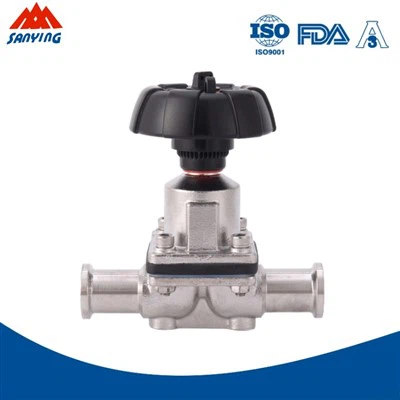
As a trusted supplier of manual sanitary diaphragm valves, I often encounter inquiries from various industries regarding the flow rate of these essential components. Understanding the flow rate of a manual sanitary diaphragm valve is crucial for ensuring efficient and effective operation in sanitary applications, such as food and beverage processing, pharmaceutical manufacturing, and biotechnology. In this blog post, I will delve into the factors that influence the flow rate of a manual sanitary diaphragm valve and provide practical insights to help you make informed decisions for your specific needs.
What is Flow Rate?
Flow rate refers to the volume of fluid that passes through a valve or a piping system per unit of time. It is typically measured in units such as liters per minute (L/min), cubic meters per hour (m³/h), or gallons per minute (GPM). The flow rate of a manual sanitary diaphragm valve is determined by several factors, including the valve's size, design, and the pressure differential across the valve.
Factors Affecting Flow Rate
Valve Size
The size of a manual sanitary diaphragm valve is one of the primary factors that influence its flow rate. Generally, larger valves have a higher flow capacity than smaller valves. This is because larger valves have a greater cross-sectional area, allowing more fluid to pass through them in a given amount of time. When selecting a valve for your application, it is important to consider the required flow rate and choose a valve size that can accommodate it.
Valve Design
The design of a manual sanitary diaphragm valve can also have a significant impact on its flow rate. Different valve designs, such as straight-through or angle valves, have different flow characteristics. Straight-through valves, for example, typically offer a higher flow rate than angle valves because they provide a more direct path for the fluid to flow through. Additionally, the shape and configuration of the valve's diaphragm can affect the flow rate. A diaphragm with a smooth surface and a large opening will generally allow for a higher flow rate than a diaphragm with a rough surface or a small opening.
Pressure Differential
The pressure differential across a manual sanitary diaphragm valve is another important factor that affects its flow rate. The pressure differential is the difference in pressure between the inlet and outlet of the valve. As the pressure differential increases, the flow rate through the valve also increases. However, it is important to note that there is a limit to the pressure differential that a valve can withstand. Exceeding the maximum pressure differential can cause the valve to malfunction or even fail.
Fluid Properties
The properties of the fluid being processed can also affect the flow rate of a manual sanitary diaphragm valve. Factors such as viscosity, density, and temperature can all have an impact on the flow behavior of the fluid. For example, a highly viscous fluid will flow more slowly through a valve than a low-viscosity fluid. Similarly, a fluid with a high density will require more energy to move through the valve than a fluid with a low density. When selecting a valve for your application, it is important to consider the properties of the fluid and choose a valve that is suitable for the specific fluid characteristics.
Calculating Flow Rate
Calculating the flow rate of a manual sanitary diaphragm valve can be a complex process that requires a thorough understanding of the valve's design, the piping system, and the fluid properties. In general, the flow rate of a valve can be calculated using the following formula:
Q = Cv * √(ΔP / SG)
Where:
Q = Flow rate (L/min or GPM)
Cv = Valve flow coefficient
ΔP = Pressure differential across the valve (psi or bar)
SG = Specific gravity of the fluid
The valve flow coefficient (Cv) is a measure of the valve's flow capacity. It represents the number of US gallons per minute (GPM) of water that will flow through the valve at a pressure differential of 1 psi. The Cv value is typically provided by the valve manufacturer and can vary depending on the valve size, design, and configuration.
Choosing the Right Valve for Your Application
When selecting a manual sanitary diaphragm valve for your application, it is important to consider the required flow rate, the pressure differential, the fluid properties, and the specific requirements of your process. Here are some key factors to keep in mind:
Flow Rate Requirements
Determine the required flow rate for your application based on the process specifications. Consider factors such as the volume of fluid that needs to be processed, the production rate, and the desired level of efficiency. Choose a valve size and design that can provide the required flow rate within the specified pressure differential.
Pressure Differential
Understand the pressure differential across the valve and choose a valve that can withstand the maximum pressure differential expected in your application. Exceeding the maximum pressure differential can cause the valve to malfunction or even fail, leading to costly downtime and potential safety hazards.
Fluid Properties
Consider the properties of the fluid being processed, such as viscosity, density, and temperature. Choose a valve that is compatible with the specific fluid characteristics and can provide a reliable and efficient flow control solution.


Sanitary Requirements
In sanitary applications, it is important to choose a valve that meets the strict hygiene standards and regulations. Look for valves that are made from high-quality materials, such as stainless steel, and have a smooth, crevice-free surface to prevent the accumulation of bacteria and other contaminants.
Our Manual Sanitary Diaphragm Valve Products
As a leading supplier of manual sanitary diaphragm valves, we offer a wide range of high-quality products to meet the diverse needs of our customers. Our valves are designed and manufactured to the highest standards of quality and performance, ensuring reliable and efficient operation in a variety of sanitary applications.
- 3A Manual SS304/316 Sanitary Diaphragm Valve: These valves are made from high-grade stainless steel (SS304 or SS316) and feature a clamped design for easy installation and maintenance. They are available in a variety of sizes and configurations to suit different flow rate requirements.
- 3A Flange Manual Hygienic Sanitary Diaphragm Valve: These valves are designed with a flange connection for a secure and leak-proof installation. They are ideal for applications where a high level of hygiene and reliability is required.
- 3A Forged GEMU Replaced Sanitary Diaphragm Valve: These valves are made from forged stainless steel and offer superior strength and durability. They are designed to replace GEMU diaphragm valves and provide a cost-effective alternative without compromising on quality and performance.
Contact Us for Procurement and Consultation
If you are in the market for a manual sanitary diaphragm valve or need further information about our products and services, please do not hesitate to contact us. Our team of experienced professionals is dedicated to providing you with the best possible solutions for your specific needs. We can help you select the right valve for your application, answer any technical questions you may have, and provide support throughout the procurement process.
Whether you are a small-scale producer or a large manufacturing facility, we have the expertise and resources to meet your requirements. Contact us today to discuss your needs and start working towards a more efficient and reliable sanitary process.
References
- "Valve Handbook," by J. Paul Tullis
- "Fluid Mechanics and Hydraulics," by Mott, Robert L.
- Manufacturers' technical specifications and data sheets for manual sanitary diaphragm valves.