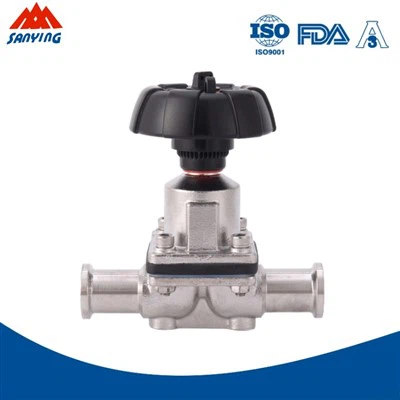
Detecting the internal leakage of a pneumatic butterfly valve is crucial for ensuring the efficiency and safety of industrial processes. As a pneumatic butterfly valve supplier, I understand the importance of accurate detection methods. In this blog, I will share some effective ways to detect the internal leakage of a pneumatic butterfly valve.
Understanding the Basics of Pneumatic Butterfly Valves
Before diving into the detection methods, it's essential to have a basic understanding of pneumatic butterfly valves. A pneumatic butterfly valve consists of a disc mounted on a rotating shaft. When the valve is open, the disc rotates to allow the flow of fluid or gas. When closed, the disc blocks the flow. The pneumatic actuator is responsible for controlling the movement of the disc.
There are different types of pneumatic butterfly valves available in the market. For example, the Weld Pneumatic Actuator Sanitary Butterfly Valve is designed for applications where hygiene is of utmost importance, such as in the food and beverage industry. On the other hand, the Pneumatic Normally Close/Open Sanitary Butterfly Valve offers flexibility in terms of its default position.
Visual Inspection
One of the simplest ways to detect internal leakage is through visual inspection. Start by examining the valve body for any signs of external damage, such as cracks or corrosion. A damaged valve body can lead to internal leakage. Check the seals around the valve stem and the disc. If the seals are worn out or damaged, they may not provide a proper seal, resulting in leakage.


Look for any signs of fluid or gas seepage around the valve. This could be indicated by wet spots, stains, or the presence of a hissing sound. If you notice any of these signs, it's likely that there is an internal leakage issue. However, visual inspection alone may not be sufficient to detect all types of internal leakage, especially in cases where the leakage is small.
Pressure Testing
Pressure testing is a more accurate method for detecting internal leakage. There are two main types of pressure tests: the hydrostatic test and the pneumatic test.
Hydrostatic Test
In a hydrostatic test, the valve is filled with a liquid, usually water, and pressurized to a specified level. The pressure is maintained for a certain period, and any drop in pressure indicates internal leakage. To perform a hydrostatic test, follow these steps:
- Close the valve and isolate it from the system.
- Connect a pressure gauge to the valve.
- Fill the valve with water using a pump.
- Gradually increase the pressure to the specified test pressure.
- Hold the pressure for the required time, typically 10 - 30 minutes.
- Observe the pressure gauge. If the pressure drops significantly, there is likely an internal leakage.
Pneumatic Test
A pneumatic test uses compressed air or gas instead of a liquid. The procedure is similar to the hydrostatic test, but there are some additional safety considerations. Since compressed air or gas can be more dangerous than water, it's important to follow proper safety protocols.
- Close the valve and isolate it from the system.
- Connect a pressure gauge and a source of compressed air or gas to the valve.
- Gradually increase the pressure to the specified test pressure.
- Hold the pressure for the required time.
- Use a soap solution to check for leaks around the valve. If bubbles form, it indicates a leak.
Ultrasonic Testing
Ultrasonic testing is a non - destructive testing method that can be used to detect internal leakage in pneumatic butterfly valves. This method works by sending ultrasonic waves through the valve and analyzing the reflections. When there is an internal leakage, the ultrasonic waves will be affected, and the resulting signal can be used to detect the presence and location of the leak.
To perform ultrasonic testing, a trained technician will use an ultrasonic detector. The detector is placed on the outside of the valve body, and the technician will listen for any abnormal sounds or analyze the signal on the detector's screen. Ultrasonic testing is particularly useful for detecting small leaks that may not be detectable by other methods.
Acoustic Emission Testing
Acoustic emission testing is another non - destructive testing method. When a valve is leaking, the fluid or gas flowing through the leak creates acoustic emissions. These emissions can be detected using sensors placed on the valve body.
The sensors pick up the acoustic signals, and a computer system analyzes them to determine the presence and severity of the leak. Acoustic emission testing is a real - time monitoring method, which means it can detect leaks as they occur. This makes it a valuable tool for continuous monitoring of pneumatic butterfly valves in critical applications.
Implications of Internal Leakage
Internal leakage in a pneumatic butterfly valve can have several negative implications. Firstly, it can lead to a loss of process efficiency. If the valve is not closing properly, there will be a continuous flow of fluid or gas, which can waste energy and resources. Secondly, internal leakage can compromise the safety of the system. For example, in a system handling hazardous materials, a leak can pose a significant risk to the environment and the personnel working in the area.
Preventive Measures
To prevent internal leakage in pneumatic butterfly valves, regular maintenance is essential. This includes inspecting and replacing worn - out seals, lubricating moving parts, and checking for any signs of damage. It's also important to select the right valve for the application. Consider factors such as the type of fluid or gas, the operating pressure and temperature, and the required flow rate.
Conclusion
Detecting the internal leakage of a pneumatic butterfly valve is a critical task that requires a combination of different methods. Visual inspection, pressure testing, ultrasonic testing, and acoustic emission testing are all effective ways to identify internal leakage. As a pneumatic butterfly valve supplier, I recommend regular monitoring and maintenance to ensure the proper functioning of the valves.
If you are facing issues with internal leakage or are looking to purchase high - quality pneumatic butterfly valves, I encourage you to reach out to us for a detailed discussion. We can provide you with the right solutions based on your specific requirements.
References
- ASME Boiler and Pressure Vessel Code, Section V - Nondestructive Examination
- API 598 - Valve Inspection and Testing
- ISO 5208 - Industrial valves - Pressure testing of valves