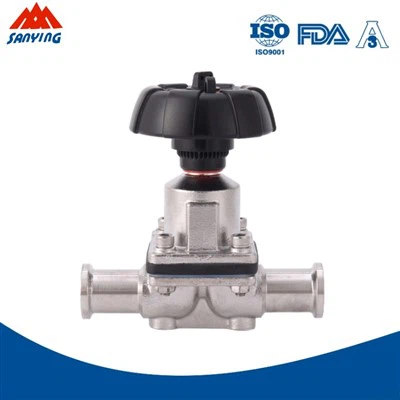
Can a manual sanitary angle seat valve be used in pharmaceutical industries?
In the highly regulated and quality - conscious pharmaceutical industries, the selection of equipment and components is of utmost importance. Manual sanitary angle seat valves are a type of valve that has been gaining attention for their potential use in these industries. As a supplier of manual sanitary angle seat valves, I'd like to explore in detail whether they are suitable for pharmaceutical applications.
Understanding Manual Sanitary Angle Seat Valves
Manual sanitary angle seat valves are designed with a 90 - degree angle between the inlet and the outlet. They are operated manually, usually by a handwheel or a lever, which allows for direct control of the flow of fluids. These valves are constructed to meet strict sanitary standards, which means they are made from materials that are resistant to corrosion, easy to clean, and do not contaminate the fluids passing through them.
The design of the angle seat provides several advantages. It allows for a more efficient flow of fluids, reducing pressure drops and turbulence. This is particularly important in pharmaceutical processes where precise control of fluid flow is essential. Additionally, the angle seat design makes it easier to drain the valve completely, which is crucial for preventing the stagnation of fluids and the growth of microorganisms.
Requirements in Pharmaceutical Industries
Pharmaceutical industries have extremely high standards when it comes to equipment, and for good reason. The production of pharmaceutical products involves the handling of sensitive substances, and any contamination can have serious consequences for the safety and efficacy of the final products.


One of the primary requirements is the use of materials that are compliant with pharmaceutical regulations. For example, the valves should be made from materials such as stainless steel (e.g., 316L), which is resistant to corrosion and can withstand the harsh cleaning and sterilization processes used in pharmaceutical facilities. The internal surfaces of the valves should be smooth to prevent the accumulation of particles and microorganisms.
Another important requirement is the ability to clean and sterilize the valves effectively. Pharmaceutical processes often involve regular cleaning and sterilization cycles to ensure the aseptic conditions of the production environment. Valves need to be designed in a way that allows for thorough cleaning, including the removal of all traces of previous products and contaminants.
Precise control of fluid flow is also essential in pharmaceutical manufacturing. Whether it's the addition of raw materials, the transfer of intermediate products, or the filling of final dosage forms, accurate control of the flow rate and volume of fluids is necessary to ensure the consistency and quality of the products.
Suitability of Manual Sanitary Angle Seat Valves in Pharmaceutical Industries
Material Compliance
Our manual sanitary angle seat valves are made from high - quality stainless steel 316L, which is widely recognized and approved for use in pharmaceutical applications. This material is resistant to corrosion from a wide range of chemicals and cleaning agents used in pharmaceutical facilities. It also has a smooth surface finish, which helps to prevent the adhesion of particles and microorganisms.
Cleanability and Sterilization
The design of our manual sanitary angle seat valves facilitates easy cleaning and sterilization. The angle seat design allows for complete drainage of the valve, eliminating the risk of fluid stagnation. The valves can be disassembled easily for thorough cleaning, and they can withstand high - temperature sterilization methods such as autoclaving and steam sterilization.
Flow Control
Manual operation of the angle seat valves provides operators with direct control over the fluid flow. This is beneficial in situations where precise adjustments are required. For example, during the addition of a small amount of a critical raw material, an operator can use the handwheel or lever to open or close the valve gradually, ensuring accurate control of the flow rate.
Types of Manual Sanitary Angle Seat Valves for Pharmaceutical Use
We offer a variety of manual sanitary angle seat valves to meet the different needs of pharmaceutical industries.
The BSP/NPT Female Thread Manual Sanitary Angle Seat Valve is suitable for applications where a threaded connection is required. The female thread allows for easy installation and connection to other components in the piping system.
The Clamped Manual Sanitary Angle Seat Valve is designed with a clamp connection, which provides a quick and easy way to install and remove the valve. This type of valve is ideal for applications where frequent disassembly and cleaning are necessary.
The Weld Manual Sanitary Angle Seat Valve is used in situations where a permanent and leak - free connection is required. The welded connection ensures a high - integrity joint, which is suitable for high - pressure and high - temperature applications in pharmaceutical manufacturing.
Case Studies
In some pharmaceutical manufacturing plants, our manual sanitary angle seat valves have been successfully used in the production of oral liquid medications. The valves are used to control the flow of raw materials and intermediate products during the mixing and filling processes. The precise flow control provided by the manual operation has helped to improve the consistency of the products.
In another case, in a biotech company producing monoclonal antibodies, our valves have been used in the purification process. The cleanability and material compliance of the valves have ensured that the purification process is carried out under aseptic conditions, preventing any contamination of the valuable antibodies.
Limitations and Considerations
While manual sanitary angle seat valves offer many advantages for pharmaceutical industries, there are also some limitations to consider. Manual operation means that the valves require human intervention, which may not be suitable for fully automated pharmaceutical processes. In such cases, automated valves may be more appropriate.
However, in many pharmaceutical applications, there are still areas where manual control is preferred. For example, in research and development laboratories or in small - scale production facilities, manual valves can provide a cost - effective and flexible solution.
Conclusion
In conclusion, manual sanitary angle seat valves can indeed be used in pharmaceutical industries. They meet the material, cleanability, and flow - control requirements of these industries. Our range of manual sanitary angle seat valves, including the BSP/NPT Female Thread Manual Sanitary Angle Seat Valve, Clamped Manual Sanitary Angle Seat Valve, and Weld Manual Sanitary Angle Seat Valve, offers a variety of options to meet the different needs of pharmaceutical manufacturers.
If you are in the pharmaceutical industry and are looking for reliable and high - quality manual sanitary angle seat valves, we invite you to contact us for further discussion and to explore how our products can meet your specific requirements. Our team of experts is ready to assist you in selecting the most suitable valves for your applications.
References
- Pharmaceutical Engineering Handbook, 3rd Edition
- FDA Guidelines for Equipment in Pharmaceutical Manufacturing
- ISO Standards for Sanitary Equipment in the Food and Pharmaceutical Industries