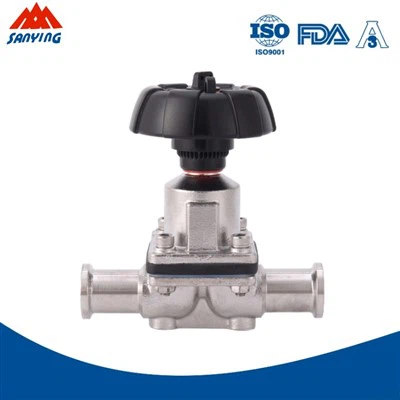
Hey there! If you're in the market for a pneumatic sanitary angle seat valve for a small - flow application, you've come to the right place. I'm a supplier of these valves, and I'm here to share some tips on how to make the best selection.
First off, let's understand what a pneumatic sanitary angle seat valve is. It's a type of valve that's commonly used in industries where hygiene and precise flow control are crucial, like food and beverage, pharmaceuticals, and cosmetics. The "pneumatic" part means it's operated by compressed air, and the "sanitary" aspect indicates that it's designed to meet strict cleanliness standards.
Flow Rate Requirements
The most important factor when selecting a valve for a small - flow application is, of course, the flow rate. You need to know exactly how much fluid or gas you'll be dealing with. Measure the required flow rate in liters per minute (LPM) or cubic meters per hour (m³/h). It's better to be a bit more accurate here, as choosing a valve with a too - high flow capacity can lead to poor control, and one with a too - low capacity won't meet your needs.
For small - flow applications, you might be looking at flow rates anywhere from a few LPM up to around 50 LPM. Make sure to account for any possible future expansions in your process. If you think your flow requirements might increase a bit in the coming years, it's wise to select a valve that can handle a slightly higher flow rate than your current needs.
Pressure Rating
Another key consideration is the pressure rating. The valve has to be able to withstand the pressure of the fluid or gas in your system. Check the maximum and minimum operating pressures. In small - flow applications, the pressure is usually not extremely high, but it still varies depending on the process.
For example, in some low - pressure small - flow systems, the pressure might be around 1 - 5 bar. But in other applications, it could go up to 10 - 15 bar. Make sure the valve you choose has a pressure rating that comfortably covers your system's pressure range. A valve with a lower pressure rating than your system can lead to leaks or even valve failure, which can be a real headache.
Material of Construction
Since it's a sanitary valve, the material of construction is super important. The most common materials for the valve body are stainless steel, usually 304 or 316L. These materials are resistant to corrosion, which is essential in applications where the valve comes into contact with liquids, especially those that might be acidic or alkaline.


The seals are also a critical part. They should be made of food - grade or pharmaceutical - grade materials like EPDM or FKM. These materials are not only compatible with the fluids in your system but also meet the hygiene standards required in sanitary applications.
Connection Type
There are different connection types available for pneumatic sanitary angle seat valves. Two popular options are welded and clamped connections.
The Weld Pneumatic Sanitary Angle Seat Valve is a great choice when you need a permanent and leak - tight connection. Welded connections are often used in applications where the valve is part of a fixed piping system and there's no need for frequent disassembly. They provide a very secure and hygienic connection, as there are no joints that can trap contaminants.
On the other hand, the Clamped Pneumatic Sanitary Angle Seat Valve offers more flexibility. Clamped connections are easy to install and remove, which is useful for applications where you need to clean or maintain the valve regularly. They're also great if you might need to change the valve or reconfigure your system in the future.
Actuator Type
The actuator is what makes the valve open and close. In pneumatic valves, the actuator is powered by compressed air. There are two main types of actuators: single - acting and double - acting.
Single - acting actuators use compressed air to open or close the valve, and a spring to return it to the other position. They're a good choice for applications where you want a fail - safe position. For example, if there's a loss of compressed air, the valve can be set to either open or close automatically, depending on your process requirements.
Double - acting actuators use compressed air to both open and close the valve. They offer more precise control and are suitable for applications where you need rapid and frequent valve operation.
Temperature Range
The temperature of the fluid or gas passing through the valve is also a factor. In small - flow applications, the temperature can vary widely. Some processes might involve cold fluids, while others could have hot ones.
Check the temperature range that the valve can handle. For example, in a food - processing application where you're dealing with hot water or steam, the valve needs to be able to withstand high temperatures without deforming or losing its sealing properties. On the other hand, in a cold - storage application, it should work well at low temperatures.
Certifications
In the sanitary industry, certifications are a big deal. Look for valves that are certified to meet relevant standards such as FDA (Food and Drug Administration) for food - related applications or USP (United States Pharmacopeia) for pharmaceutical applications. These certifications ensure that the valve meets the strict hygiene and quality requirements of your industry.
Cost and Maintenance
Of course, cost is always a consideration. But don't just go for the cheapest option. A low - cost valve might end up costing you more in the long run if it has poor performance or requires frequent maintenance.
Consider the maintenance requirements of the valve. Some valves are easier to clean and service than others. For example, valves with simple designs and easily accessible parts are generally more maintenance - friendly.
Conclusion
Selecting the right pneumatic sanitary angle seat valve for a small - flow application involves considering multiple factors like flow rate, pressure rating, material of construction, connection type, actuator type, temperature range, certifications, and cost - maintenance balance.
If you're still not sure which valve is the best fit for your small - flow application, don't hesitate to reach out. As a supplier, I have a lot of experience in this area and can help you make the right choice. Whether you need a Weld Pneumatic Sanitary Angle Seat Valve or a Clamped Pneumatic Sanitary Angle Seat Valve, I can provide you with the right product and support.
So, if you're ready to start the procurement process or just want to have a chat about your requirements, feel free to get in touch. I'm here to make sure you get the best valve for your small - flow application.
References
- "Valve Handbook" by Valve Manufacturers Association
- Industry standards such as FDA and USP guidelines for sanitary equipment