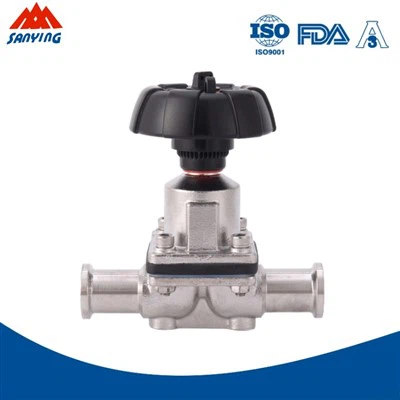
Hey there! As a supplier of pneumatic sanitary angle seat valves, I often get asked about the difference between pneumatic and electric sanitary angle seat valves. So, I thought I'd write this blog to break it down for you in a simple way.
Let's start with the basics. A sanitary angle seat valve is a type of valve that's commonly used in industries where hygiene is super important, like food and beverage, pharmaceuticals, and cosmetics. These valves are designed to control the flow of liquids or gases in a pipeline, and they're called "angle seat" valves because the seat of the valve is at an angle to the pipeline.
Now, let's talk about the two main types: pneumatic and electric.
Pneumatic Sanitary Angle Seat Valves
Pneumatic valves use compressed air to operate. They've got a piston or diaphragm inside that moves when the compressed air is applied, which in turn opens or closes the valve. One of the big advantages of pneumatic valves is their speed. They can open and close really quickly, which is great for applications where you need rapid changes in flow.
Another plus is their reliability. Since they don't rely on electricity, they're less likely to be affected by power outages or electrical malfunctions. This makes them a popular choice in industries where continuous operation is crucial.
Pneumatic valves are also pretty easy to install and maintain. You don't need a complex electrical system to run them, just a simple air supply. And if something goes wrong, it's usually easier to diagnose and fix compared to an electric valve.
We offer two main types of pneumatic sanitary angle seat valves: Weld Pneumatic Sanitary Angle Seat Valve and Clamped Pneumatic Sanitary Angle Seat Valve. The weld type is great for permanent installations where you need a tight seal, while the clamped type is more flexible and can be easily removed for cleaning or maintenance.
Electric Sanitary Angle Seat Valves
Electric valves, on the other hand, use an electric motor to operate. They're controlled by an electrical signal, which can be adjusted to open or close the valve to a specific position. This gives them a high level of precision, which is ideal for applications where you need to control the flow rate very accurately.
One of the main advantages of electric valves is their flexibility. You can program them to open and close at specific times or in response to certain conditions, like temperature or pressure. This makes them a good choice for automated systems.
However, electric valves do have some drawbacks. They're more complex than pneumatic valves, both in terms of installation and maintenance. You need to have a proper electrical system in place, and if there's an electrical problem, it can be more difficult to troubleshoot.
They're also generally slower to open and close compared to pneumatic valves. This might not be a big deal in some applications, but if you need rapid flow changes, it could be a problem.
Comparing the Two
When it comes to choosing between a pneumatic and an electric sanitary angle seat valve, it really depends on your specific needs. Here are some factors to consider:


- Speed: If you need rapid flow changes, a pneumatic valve is probably the way to go.
- Precision: If you need to control the flow rate very accurately, an electric valve might be a better choice.
- Reliability: Pneumatic valves are generally more reliable in terms of power outages and electrical malfunctions.
- Complexity: Electric valves are more complex to install and maintain, while pneumatic valves are simpler.
- Cost: Pneumatic valves are usually less expensive upfront, but you need to factor in the cost of the air supply system. Electric valves might be more expensive initially, but they can save you money in the long run if you need precise control.
Why Choose Our Pneumatic Sanitary Angle Seat Valves
As a supplier of pneumatic sanitary angle seat valves, we take pride in offering high-quality products at competitive prices. Our valves are made from top-grade materials to ensure durability and hygiene. We also provide excellent customer service, so if you have any questions or need help with installation or maintenance, we're here to assist you.
If you're in the market for a sanitary angle seat valve, I encourage you to consider our pneumatic valves. Whether you need a Weld Pneumatic Sanitary Angle Seat Valve or a Clamped Pneumatic Sanitary Angle Seat Valve, we've got you covered.
If you're interested in learning more or discussing your specific requirements, don't hesitate to get in touch. We're always happy to have a chat and help you find the right valve for your application.
References
- "Valve Handbook" by Thurnherr, Hans Dieter
- "Industrial Valves: Selection and Sizing" by Miller, R. W.