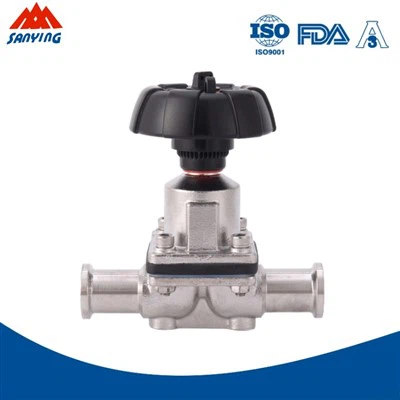
In the realm of sanitary fluid control systems, the sanitary angle seat valve stands as a crucial component, ensuring the efficient and hygienic regulation of fluid flow. As a leading supplier of sanitary angle seat valves, I've witnessed firsthand the pivotal role that fluid velocity plays in the performance and functionality of these valves. In this blog post, I'll delve into the effects of fluid velocity on a sanitary angle seat valve, exploring how it impacts various aspects of valve operation and why it's essential to consider velocity when selecting and using these valves.
Flow Capacity and Pressure Drop
One of the most significant effects of fluid velocity on a sanitary angle seat valve is its impact on flow capacity and pressure drop. Flow capacity refers to the volume of fluid that can pass through the valve per unit of time, while pressure drop is the difference in pressure between the inlet and outlet of the valve. As fluid velocity increases, the flow capacity of the valve also increases, allowing more fluid to pass through in a given period. However, this increase in flow capacity comes at the cost of a higher pressure drop.
The relationship between fluid velocity, flow capacity, and pressure drop can be explained by the principles of fluid dynamics. According to Bernoulli's principle, as the velocity of a fluid increases, its pressure decreases. When fluid flows through a sanitary angle seat valve, the narrowing of the valve passage causes an increase in fluid velocity, resulting in a decrease in pressure. This pressure drop can have several implications for the operation of the valve and the overall fluid system.
A high pressure drop can lead to increased energy consumption, as more energy is required to pump the fluid through the valve. It can also cause cavitation, a phenomenon where the pressure of the fluid drops below its vapor pressure, resulting in the formation of vapor bubbles. These bubbles can collapse violently, causing damage to the valve and other components of the fluid system. Therefore, it's crucial to select a sanitary angle seat valve with an appropriate flow capacity and pressure drop rating to ensure efficient and reliable operation.
Erosion and Wear
Another important effect of fluid velocity on a sanitary angle seat valve is its impact on erosion and wear. Erosion is the gradual removal of material from the valve surface due to the impact of fluid particles, while wear is the damage caused by friction between the valve components. As fluid velocity increases, the force of the fluid particles hitting the valve surface also increases, leading to more severe erosion and wear.
The rate of erosion and wear depends on several factors, including the fluid velocity, the properties of the fluid (such as its viscosity and density), and the material of the valve. For example, fluids with high solid content or abrasive particles can cause more significant erosion and wear than clean fluids. Similarly, valves made of softer materials are more susceptible to erosion and wear than those made of harder materials.
To minimize erosion and wear, it's essential to select a sanitary angle seat valve made of high-quality materials that are resistant to erosion and wear. Additionally, it's important to control the fluid velocity within the recommended range to reduce the impact of the fluid particles on the valve surface. Regular maintenance and inspection of the valve can also help detect and address any signs of erosion and wear before they cause significant damage.
Seal Integrity
Fluid velocity can also have a significant impact on the seal integrity of a sanitary angle seat valve. The seal is the component that prevents fluid from leaking out of the valve when it's closed. As fluid velocity increases, the force of the fluid against the seal also increases, making it more challenging to maintain a tight seal.
High fluid velocity can cause the seal to deform or wear out more quickly, leading to leaks. Additionally, the turbulence created by high fluid velocity can cause the seal to vibrate, further compromising its integrity. To ensure proper seal integrity, it's important to select a sanitary angle seat valve with a reliable sealing mechanism that can withstand the forces exerted by the fluid at the expected velocity.


Regular maintenance and replacement of the seal are also crucial to ensure its continued effectiveness. Over time, the seal may lose its elasticity or become damaged, reducing its ability to form a tight seal. By inspecting and replacing the seal as needed, you can prevent leaks and ensure the hygienic operation of the valve.
Noise and Vibration
Finally, fluid velocity can contribute to noise and vibration in a sanitary angle seat valve. As fluid flows through the valve at high velocities, it can create turbulence and pressure fluctuations, which can result in noise and vibration. This noise and vibration can be not only annoying but also potentially damaging to the valve and other components of the fluid system.
Excessive noise and vibration can cause fatigue and stress on the valve components, leading to premature failure. They can also interfere with the operation of other equipment in the vicinity of the valve. To reduce noise and vibration, it's important to select a sanitary angle seat valve with a design that minimizes turbulence and pressure fluctuations. Additionally, installing vibration dampeners or noise-reducing materials can help absorb and dissipate the energy generated by the fluid flow.
Conclusion
In conclusion, fluid velocity plays a crucial role in the performance and functionality of a sanitary angle seat valve. It affects the flow capacity, pressure drop, erosion and wear, seal integrity, and noise and vibration of the valve. As a supplier of sanitary angle seat valves, I understand the importance of considering fluid velocity when selecting and using these valves. By choosing the right valve for your application and controlling the fluid velocity within the recommended range, you can ensure efficient, reliable, and hygienic operation of your fluid system.
If you're in the market for a sanitary angle seat valve or other sanitary fluid control products, I encourage you to explore our extensive range of Weld Manual Sanitary Angle Seat Valve, Manual Weld Sanitary 3PCS Ball Valve, and 3 Way Pneumatic Sanitary Diaphragm Valve. Our team of experts is always available to assist you in selecting the right valve for your specific needs and to provide you with professional advice and support. Contact us today to start a discussion about your requirements and let us help you find the perfect solution for your sanitary fluid control system.
References
- White, F. M. (2011). Fluid Mechanics (7th ed.). McGraw-Hill Education.
- Munson, B. R., Young, D. F., & Okiishi, T. H. (2013). Fundamentals of Fluid Mechanics (7th ed.). Wiley.
- Perry, R. H., & Green, D. W. (2007). Perry's Chemical Engineers' Handbook (8th ed.). McGraw-Hill Education.